What Is an Agreement for Sale? Meaning, Importance and Key Clauses
Every property transaction has a gap between "we have a deal" and "the property is now yours." That gap might be a few weeks in a resale purchase or a few years in an under-construction project. The document that holds the deal together during that time is the Agreement for Sale.
It doesn't make you the owner. But it does lock in the terms, protect your money and give you legal standing if the other side backs out. Here's how it works.
What Is an Agreement for Sale?
An Agreement for Sale is a written contract in which a seller agrees to sell a property to a buyer at a fixed price, on specified terms, at a future date. It records the promise to sell, not the sale itself.
Under the Transfer of Property Act, 1882, an agreement for sale does not by itself create any ownership interest in the property. Ownership passes only when the sale deed is executed and registered. Until then, the agreement is an enforceable contract that binds both parties to complete the deal as agreed.
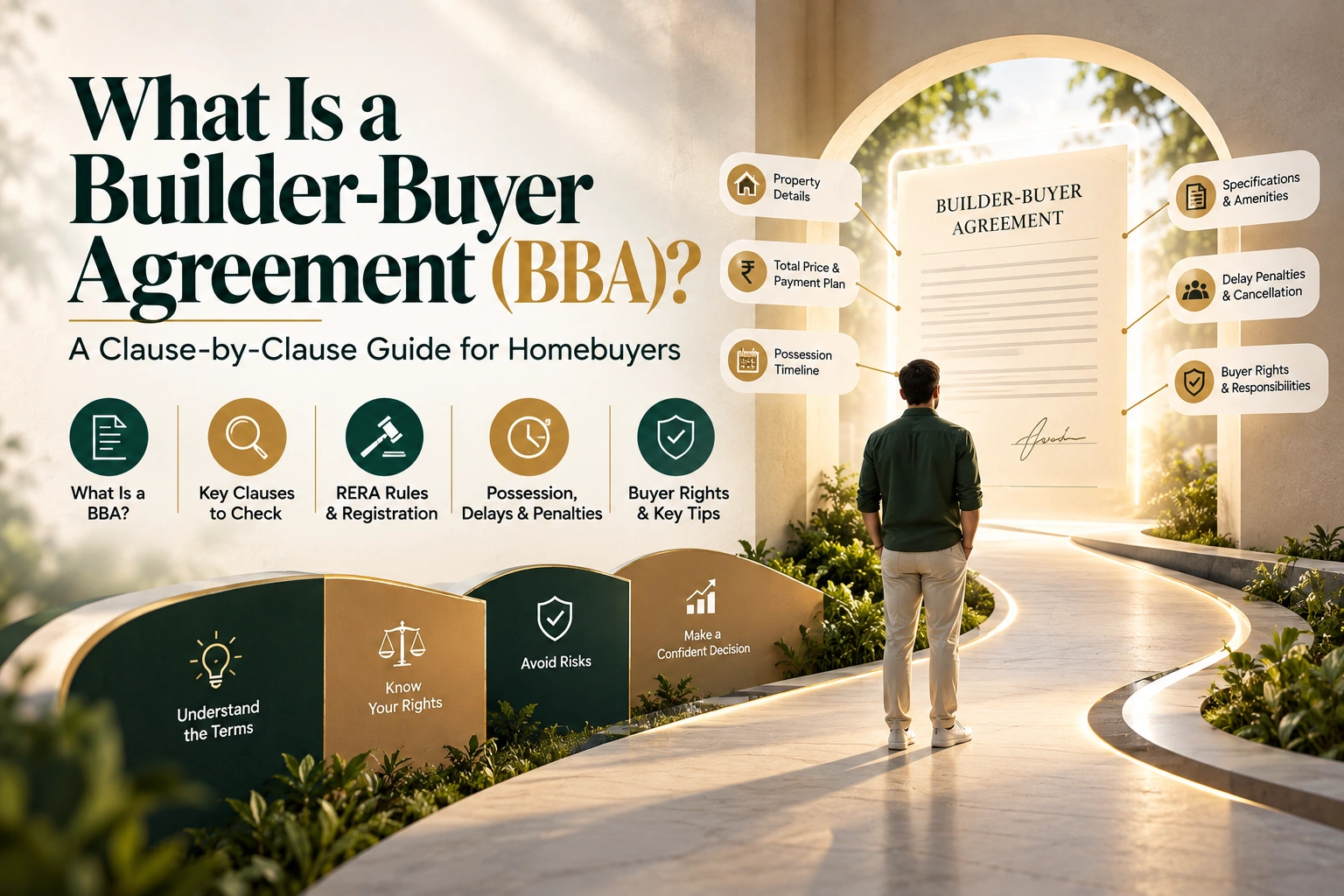
In property circles, you'll also hear it called an agreement to sell, and in new projects it's commonly known as the Builder-Buyer Agreement.
Where Is an Agreement for Sale Used?
The document shows up in two very different situations.
In resale transactions, it is signed between an individual seller and buyer once the price is settled, usually along with a token amount or earnest money. It gives the buyer time to arrange a home loan and complete due diligence, and gives the seller time to clear dues or obtain documents.
In new, under-construction projects, it is signed between the developer and the buyer. Here it is regulated by the RERA Act, 2016, and has to follow the model format prescribed under the state's RERA rules.
Why Is an Agreement for Sale Important?
A handshake and a cheque aren't enough in property. The Agreement for Sale matters because it:
- Fixes the sale price so neither side can renegotiate at will
- Sets out a clear payment schedule and timeline for completing the sale
- Records the property details so there's no dispute later about what was sold
- Defines what happens if either party backs out or defaults
- Supports home loan processing, since banks typically ask for it
- Gives the buyer the right to seek specific performance in court if the seller refuses to complete the sale
What Are the Key Clauses in an Agreement for Sale?
A well-drafted agreement for sale should clearly include:
Details of the parties: Full names, addresses and identity details of the buyer and the seller or developer.
Property description: Address, plot or unit number, carpet area, boundaries, floor, parking and any fixtures included in the sale.
Sale consideration: The total price agreed, along with the advance payment or token already paid.
Payment terms: How and when the balance will be paid, including any link to loan disbursement or construction stages.
Title and encumbrances: The seller's declaration that the property has a clear title and is free from loans, disputes or legal claims.
Timeline for sale deed: The date by which the sale deed will be executed and possession handed over.
Default and cancellation: Consequences if the buyer fails to pay or the seller fails to transfer, including refund or forfeiture terms.
Taxes and charges: Who bears stamp duty, registration charges, pending property tax, society dues and utility bills.
Possession clause: The condition in which the property will be handed over.
Dispute resolution: The method of settling disagreements, such as arbitration or the relevant court.
Agreement for Sale Under RERA
For under-construction projects, RERA brought significant protections for buyers. Under Section 13 of the RERA Act, a developer cannot take more than 10 percent of the property cost as an advance without first executing a written agreement for sale and getting it registered.
State RERA rules, including those in Haryana, also prescribe a model agreement for sale that covers carpet area, possession dates, interest on delays, defect liability and refund rights. A developer's agreement should not contain clauses that dilute these protections.
Is Registration of an Agreement for Sale Mandatory?
It depends on the type of transaction and the state, but registration is strongly recommended in every case.
For RERA-registered projects, registration is required once more than 10 percent of the price is collected. For resale deals, an agreement where the buyer is handed possession or pays a substantial part of the price should be registered to be fully enforceable, particularly if the buyer wants to rely on the protection of part performance under the Transfer of Property Act.
An unregistered agreement can still serve as evidence of a contract, but it carries weaker legal standing if a dispute arises.
How Much Stamp Duty Is Paid on an Agreement for Sale?
Stamp duty on an agreement for sale varies widely from state to state. In some states, a nominal duty is paid at the agreement stage and the full duty is paid on the sale deed. In others, a large part or even the full duty may be payable when the agreement is signed, particularly if possession is handed over.
Since rates and rules change, always check the current stamp duty applicable in your state before signing, and confirm whether the amount paid on the agreement will be adjusted when the sale deed is registered.
What Is the Difference Between an Agreement for Sale and a Sale Deed?
This is the most common question buyers ask, and the distinction is important.
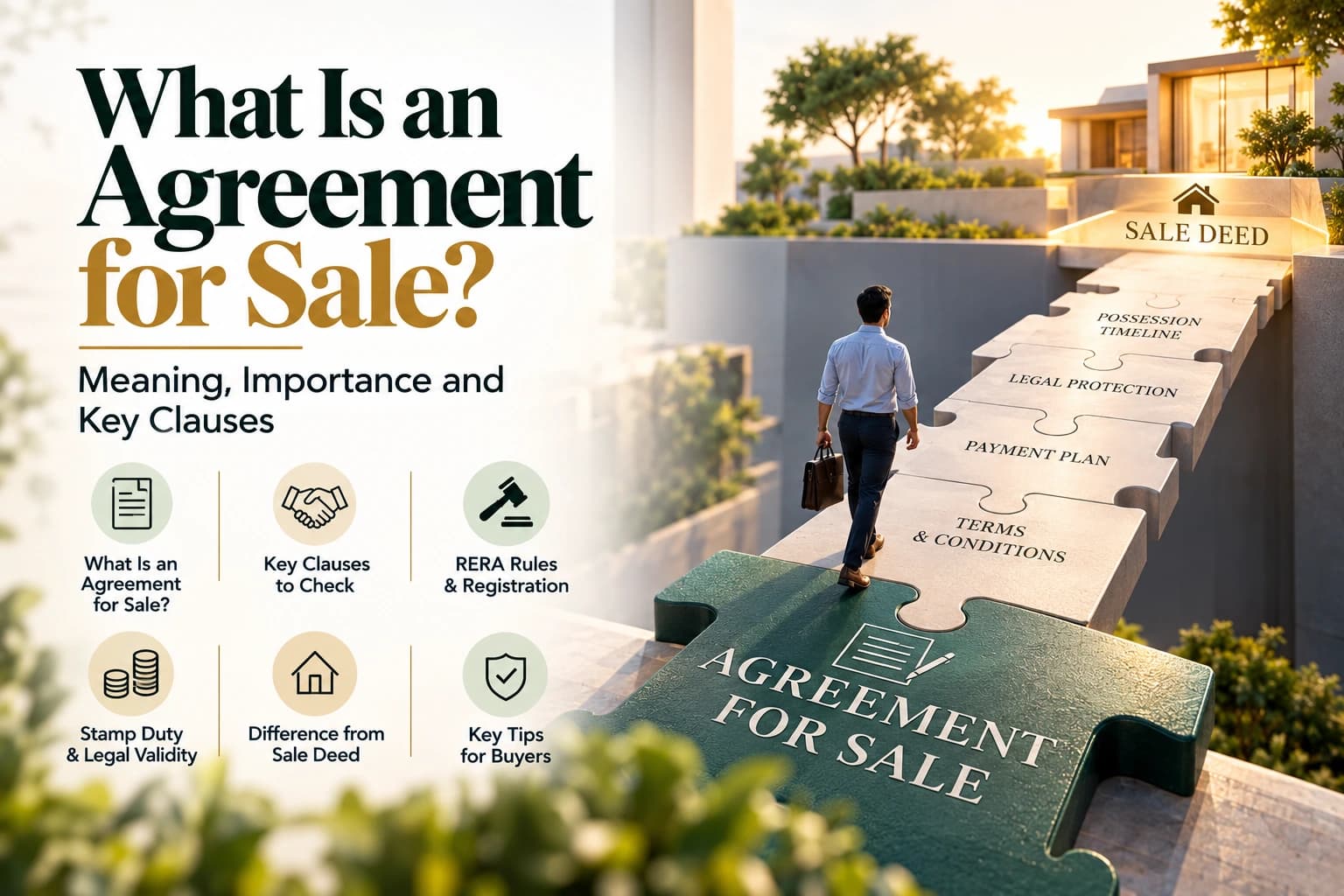
An Agreement for Sale is a promise to transfer the property in the future. Ownership stays with the seller, and the document records the terms under which the sale will happen.
A Sale Deed is the final document that actually transfers ownership to the buyer. It must be registered, and once it is, the buyer becomes the legal owner.
In short, the agreement for sale sets up the deal. The sale deed completes it.
Agreement for Sale vs Builder-Buyer Agreement
In a new project, the two are essentially the same document. "Builder-Buyer Agreement" is the term the industry has used for years, while "Agreement for Sale" is the term used in the RERA Act. The difference lies in usage, not in legal purpose. In resale transactions, however, there's no builder involved, so the term Agreement for Sale is the one that applies.
What Happens If One Party Backs Out?
If the buyer backs out without a valid reason, the seller may be entitled to forfeit the token amount or earnest money, depending on what the agreement says.
If the seller backs out, the buyer can demand a refund, claim compensation, or approach the court for specific performance under the Specific Relief Act, 1963, asking that the seller be directed to complete the sale.
This is exactly why the default and cancellation clauses need to be written clearly and fairly.
Tips Before Signing an Agreement for Sale
- Verify the seller's title documents and check for any loans or legal disputes on the property
- For new projects, confirm the RERA registration number and approved plans
- Make sure the price, payment terms and possession date are stated precisely
- Pay only through traceable banking channels and keep every receipt
- Check who bears stamp duty, registration and pending dues
- Avoid signing agreements with blank spaces or missing schedules
- Have a property lawyer review the draft, especially for resale purchases
Final Thoughts
An Agreement for Sale sits between a verbal deal and legal ownership, and that's precisely what makes it so important. It protects your money, fixes the terms and gives you a legal remedy if the other side doesn't keep their word. Whether you're buying a resale flat or booking an apartment in a new project, reading and registering this document properly is one of the simplest ways to avoid a costly dispute later.