What Is a Builder-Buyer Agreement? A Clause-by-Clause Guide for Homebuyers
Most homebuyers spend weeks comparing locations, floor plans and price lists, and then sign a 40-page document in about 20 minutes. That document is the Builder-Buyer Agreement, and it decides almost everything that happens after your booking: when you get possession, what you pay and when, what happens if the project is delayed, and what you can do if something goes wrong.
It deserves far more attention than it usually gets.
What Is a Builder-Buyer Agreement?
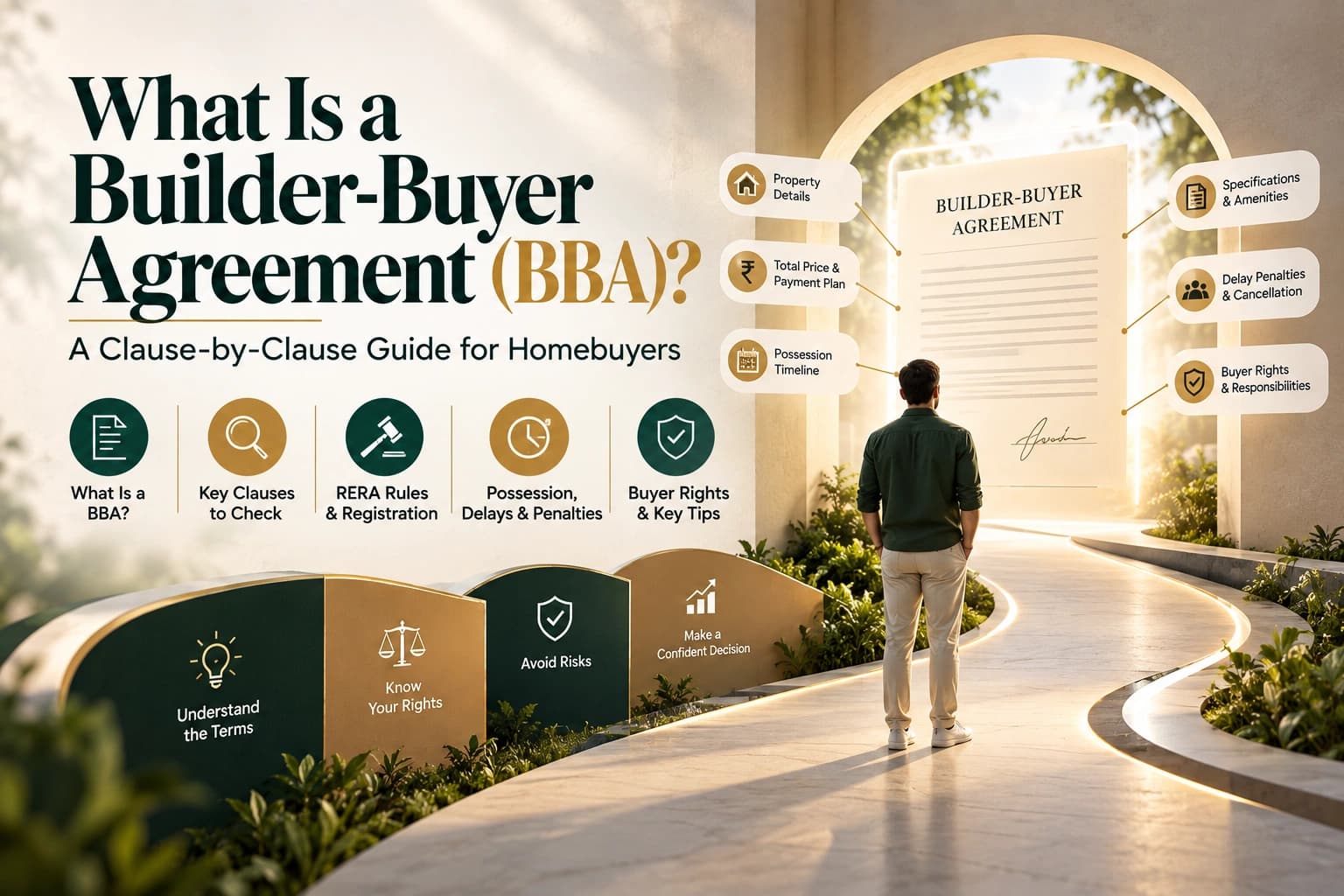
A Builder-Buyer Agreement, commonly called a BBA, is a legally binding contract between a property developer and a buyer, signed when purchasing a unit in an under-construction project. It records the terms of the sale, including the price, payment schedule, specifications, possession date, and the rights and duties of both parties.
Under the RERA framework, this document is formally known as the Agreement for Sale, and you'll see both terms used interchangeably.
Think of the BBA as the rulebook for your purchase. Until the sale deed is executed at possession, it is the main document that protects your interest in the property.
Why Is a Builder-Buyer Agreement Important?
Before RERA, many agreements were heavily one-sided. Developers could delay possession for years while paying buyers a token penalty, yet charge steep interest if a buyer missed a single instalment. Buyers had little choice but to sign.
The BBA matters because it:
- Defines exactly what you are buying, including unit number, carpet area and specifications
- Sets out the total cost and every charge you'll pay
- Fixes a possession timeline the developer is bound by
- Lays down penalties for delay on both sides
- Serves as key evidence if you ever need to approach RERA or a consumer court
When Is the Builder-Buyer Agreement Signed?
The typical sequence in a new project is EOI or application, followed by allotment letter, and then the Builder-Buyer Agreement.
Under Section 13 of the RERA Act, 2016, a developer cannot accept more than 10 percent of the property cost as an advance or application fee without first executing a written agreement for sale with the buyer and getting it registered. So if you've paid more than 10 percent and still haven't signed and registered your BBA, that's a warning sign.
What Does a Builder-Buyer Agreement Contain?
A well-drafted BBA should clearly cover the following:
Property details: Unit number, floor, tower, carpet area as defined under RERA, and parking allotment.
Total price and cost breakup: Basic sale price, EDC and IDC, preferential location charges, club membership, maintenance deposits, GST and any other charges.
Payment plan: Whether it's a construction-linked plan, down payment plan or a flexi plan, with clear milestones.
Possession date: The committed date of handover, along with any grace period.
Delay compensation: Interest payable by the developer if possession is delayed.
Specifications and amenities: Flooring, fittings, fixtures and the common facilities promised.
Approvals and title: Details of the land title, project licence, sanctioned plans and RERA registration number.
Cancellation and refund terms: What happens if either party backs out.
Defect liability: The developer's responsibility for structural and workmanship defects after possession.
Transfer and resale terms: Rules and charges for transferring the unit before possession.
Dispute resolution: How disagreements will be handled.
Key Clauses to Check Before Signing a BBA
Some clauses deserve a second and even a third reading.
Possession and Delay Clause
Look for a firm possession date, not vague language like "subject to availability of materials." Under Section 18 of the RERA Act, if the developer fails to hand over possession as agreed, the buyer can either withdraw and claim a refund with interest, or stay invested and receive interest for every month of delay.
Interest Rate on Delays
RERA requires the interest rate to be the same for both parties. If the developer charges you a certain rate for late payments, it must pay you the same rate for delayed possession. An agreement that charges buyers 18 percent while offering them a few rupees per square foot is not in line with RERA.
Carpet Area and Super Area
RERA mandates that units be sold on the basis of carpet area. Check that the agreement mentions it clearly, and look for the clause on what happens if the final area changes. RERA-compliant agreements generally allow only a small variation, with price adjustments on either side.
Escalation Clause
Some agreements allow the developer to raise the price later due to increased construction costs or government charges. Check whether such an escalation clause exists and whether it has a cap.
Force Majeure Clause
A force majeure clause protects the developer from penalties during events beyond their control, such as natural disasters or pandemics. Make sure the definition is specific and not stretched to cover routine delays like labour shortages or funding issues.
Cancellation Clause
Check how much the developer can deduct if you cancel. Excessive forfeiture of the booking amount has been questioned by regulators and courts, so a fair agreement should state a reasonable, clearly defined deduction.
Structural Defect Liability
Under Section 14 of the RERA Act, the developer is responsible for fixing structural defects and poor workmanship reported within five years of possession, at no cost to the buyer. This should be reflected in your agreement.
Is Registration of a Builder-Buyer Agreement Mandatory?
Yes, under RERA the agreement for sale must be registered once the developer collects more than 10 percent of the cost. Registration involves paying stamp duty and registration charges as applicable in the state, and it gives the document stronger legal standing. Buyers should keep the registered original safely, as banks will also need it for home loan disbursement.
What Is a Model Builder-Buyer Agreement?
To curb one-sided contracts, RERA rules in most states, including Haryana, prescribe a model agreement for sale. Developers are expected to follow this format, and they cannot add clauses that contradict the Act or the rules. If your agreement looks very different from the model format, or dilutes buyer rights, it's worth questioning before you sign.
Difference Between Builder-Buyer Agreement and Sale Deed
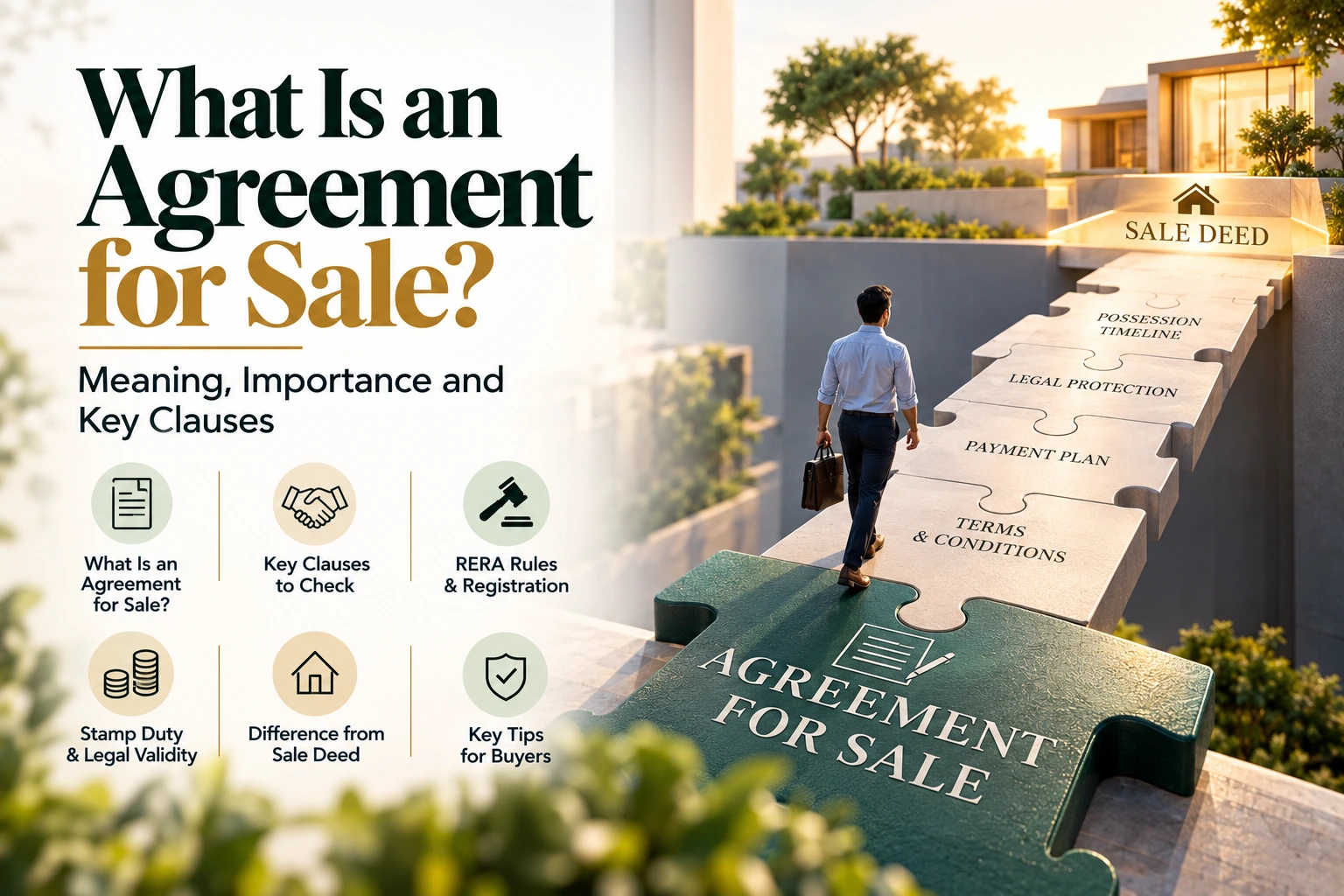
The Builder-Buyer Agreement is signed during construction. It's a promise to sell the unit on agreed terms in the future.
The sale deed, also called a conveyance deed, is executed at the time of possession. It actually transfers ownership of the property to you.
The BBA protects your rights until the property is complete. The sale deed makes you the legal owner.
Can a Buyer Negotiate the Builder-Buyer Agreement?
Individual buyers have limited room, since large developers use a standard format for everyone. But you can still ask for clarifications in writing, request a side letter for specific commitments made during the sale, and push back on terms that clearly go against RERA. If multiple buyers in a project raise the same concern, developers are more likely to respond.
Tips for Homebuyers Before Signing a BBA
- Read the entire agreement, not just the first few pages
- Match every promise made in the brochure with what's written in the agreement
- Confirm the project's RERA registration and check the approved plans
- Verify that the total cost matches the price breakup you were given
- Get a property lawyer to review the document if you're unsure of any clause
- Never sign an agreement with blank spaces or missing annexures
- Keep copies of all receipts, emails and correspondence with the developer
Final Thoughts
A Builder-Buyer Agreement is not a formality. It's the single most important document in your home-buying journey until the sale deed is signed. RERA has made these agreements far fairer than they used to be, but the law only works for buyers who know what their agreement says. Take the time to read it, question what doesn't feel right, and sign only when you're clear on every clause that affects your money and your home.