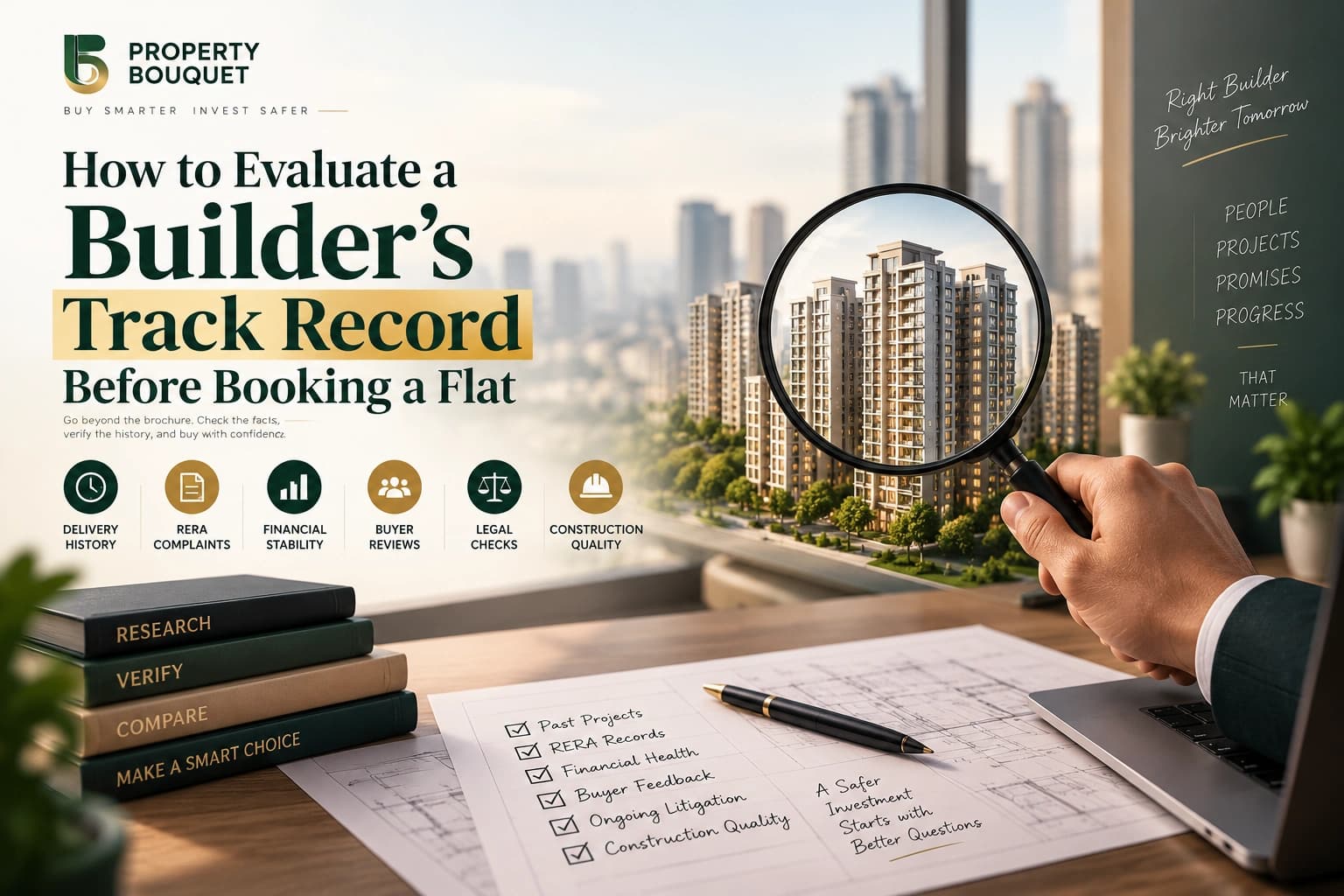
How to Evaluate a Builder's Track Record Before Booking a Flat
A polished sales office and a convincing brochure tell you almost nothing about whether a builder actually delivers on time. Here's how to verify what genuinely matters before you book.
Introduction
Two developers can present nearly identical brochures — same amenities, similar pricing, comparable specifications. But one delivers possession on schedule with the quality promised, while the other pushes the timeline back by three years and cuts corners along the way.
The difference rarely shows up in the marketing material. It shows up in the builder's actual history — how their past projects were funded, delivered, and maintained after possession. Most of that history is publicly available if you know where to look, and checking it properly takes a few hours, not weeks.
Check the Builder's Past Project Delivery Timeline
Start with the basics: how many projects has this builder actually completed, and were they delivered on or close to the originally promised date? A builder with a consistent pattern of multi-year delays across several projects is telling you something important about what to expect from your own purchase.
This information isn't always in the brochure, but it's usually available through the RERA website, property forums, and by directly asking existing residents of the builder's completed projects.
Look Up RERA Registration and Complaint History
Every state's RERA website maintains a public record of registered projects, including complaints filed against the developer. Search for the specific project you're considering, and also check the builder's other registered projects for any pattern of complaints — repeated delay disputes, fund misuse allegations, or non-compliance notices are all visible on record.
A single isolated complaint may not be a dealbreaker, but a recurring pattern across multiple projects is a meaningful red flag.
Assess Financial Stability
A developer's financial health directly affects their ability to complete construction on schedule. While detailed financials aren't always public for private builders, a few practical signals help: whether the builder has multiple stalled projects elsewhere, whether they're consistently launching new projects to fund older, delayed ones, and whether the specific project has bank funding approval — since banks typically conduct their own due diligence before approving a project for home loans.
If a project isn't approved for financing by any major bank, that's worth investigating further before proceeding.
Visit Completed Projects by the Same Builder
There's no substitute for seeing a builder's actual construction quality in person. Visit at least one or two of their completed, possession-ready projects, and pay attention to the finish quality, common area maintenance, functioning of lifts and amenities, and general upkeep a few years after handover — not just how the sample flat looked on launch day.
Speaking with residents directly, if possible, often surfaces issues that never make it into any online review.
Check for Ongoing Litigation
A quick search for the builder's name alongside terms like "litigation," "case," or "NCLT" can reveal pending legal disputes, insolvency proceedings, or consumer court cases. This is publicly available information and takes only a few minutes to check, yet is frequently skipped by buyers focused on the property itself rather than the entity building it.
Read Verified Buyer Reviews, Not Just Testimonials
Testimonials on a builder's own website are curated by definition. Independent sources — real estate forums, RERA complaint records, and reviews on neutral property platforms — tend to offer a more honest picture, particularly around post-possession issues like maintenance handover, promised amenities that were delayed or dropped, and how responsive the builder was to complaints after the sale was complete.
Evaluate Construction Quality on Ongoing Projects
If you're considering an under-construction project, visit the actual construction site rather than relying solely on the sample flat or sales office presentation. Check whether construction is progressing at a pace consistent with the promised timeline, and compare the quality of work visible on site against what's shown in marketing renders.
Understand the Builder's Approach to Delays and Compensation
Ask directly, and check in writing, what the builder's policy is if possession is delayed beyond the RERA-registered date. A builder confident in their delivery track record will typically have no issue committing to clear delay-compensation terms in the agreement. Reluctance here is itself informative.
A Real-World Example
A buyer considering two similar projects checked both builders' RERA complaint history before deciding. One builder had two completed projects with clean records and on-time delivery. The other had three ongoing projects, all delayed by over a year, with multiple RERA complaints related to fund misuse. The pricing and specifications on paper looked nearly identical — but the track record made the actual risk very different, and the buyer chose accordingly.
Common Mistakes Buyers Make
A common mistake is relying entirely on the sales team's verbal assurances about the builder's reputation, without independently checking RERA records or visiting completed projects.
Another frequent error is assuming a well-known, large-scale builder is automatically low-risk. Track record should be evaluated project by project and region by region, since even established builders can have specific projects or locations with a weaker delivery history.
Some buyers also skip checking litigation records entirely, assuming that if a project is being actively marketed and sold, there can't be any serious legal issues attached to the builder.
Expert Tip
Before booking, ask the builder directly for a list of their last three completed projects along with the original promised possession dates. Cross-check this against the actual RERA-recorded completion dates. A builder who avoids giving a straight answer to this specific question is usually telling you something worth paying attention to.
Frequently Asked Questions
Where can I check a builder's RERA complaint history? On your state's official RERA website, where registered projects and any complaints filed against them are publicly listed.
Does a builder's brand reputation guarantee timely delivery? Not necessarily. Even well-known builders can have specific projects with delays or complaints, so it's worth checking the track record of the specific project and region, not just the brand name.
What's the best way to assess construction quality before booking? Visit the builder's completed, possession-ready projects in person, and speak with residents there about their actual experience, rather than relying only on the sample flat at the sales office.
Is it important to check if a project is bank-approved for home loans? Yes. Banks conduct their own due diligence before approving a project for financing, so bank approval is a useful independent signal of the project's credibility.
What should I do if a builder has pending litigation? Investigate the nature and status of the case before proceeding. Not all litigation indicates serious risk, but it's worth understanding what it relates to and whether it could affect your specific project.
Final Thoughts
A builder's brochure will always look convincing — that's what it's designed to do. Their actual track record, visible through RERA records, completed projects, and public litigation history, tells a far more reliable story about what to expect from your own purchase.
Spend a few hours verifying this before you book, not after. It's one of the simplest ways to meaningfully reduce the risk in what is, for most buyers, one of the largest financial commitments they'll ever make.