How to Verify a Property Before Buying: A Practical Checklist
A property purchase is usually the largest financial commitment a family makes, and it is often decided in a few weekends. The site visit goes well, the price feels reasonable, the seller is friendly, and the paperwork gets treated as a formality. That is where most disputes begin.
Property verification is not a step reserved for lawyers. Much of it can be done by the buyer, with the right documents and the right questions, before any token money changes hands.
Why Is It Important to Verify a Property Before Buying?
A flawed property rarely looks flawed. A flat can have a clean finish and still carry an unpaid loan. A plot can be in a good location and still be under a dispute between siblings. A project can be selling briskly and still lack key approvals.
Once you have paid and registered the property, these problems become yours. Litigation over title disputes can run for years, and a buyer who skipped due diligence has little leverage. Verification costs a few thousand rupees in fees and a few days of effort. A mistake can cost the property.
What Documents Should You Check Before Buying a Property?
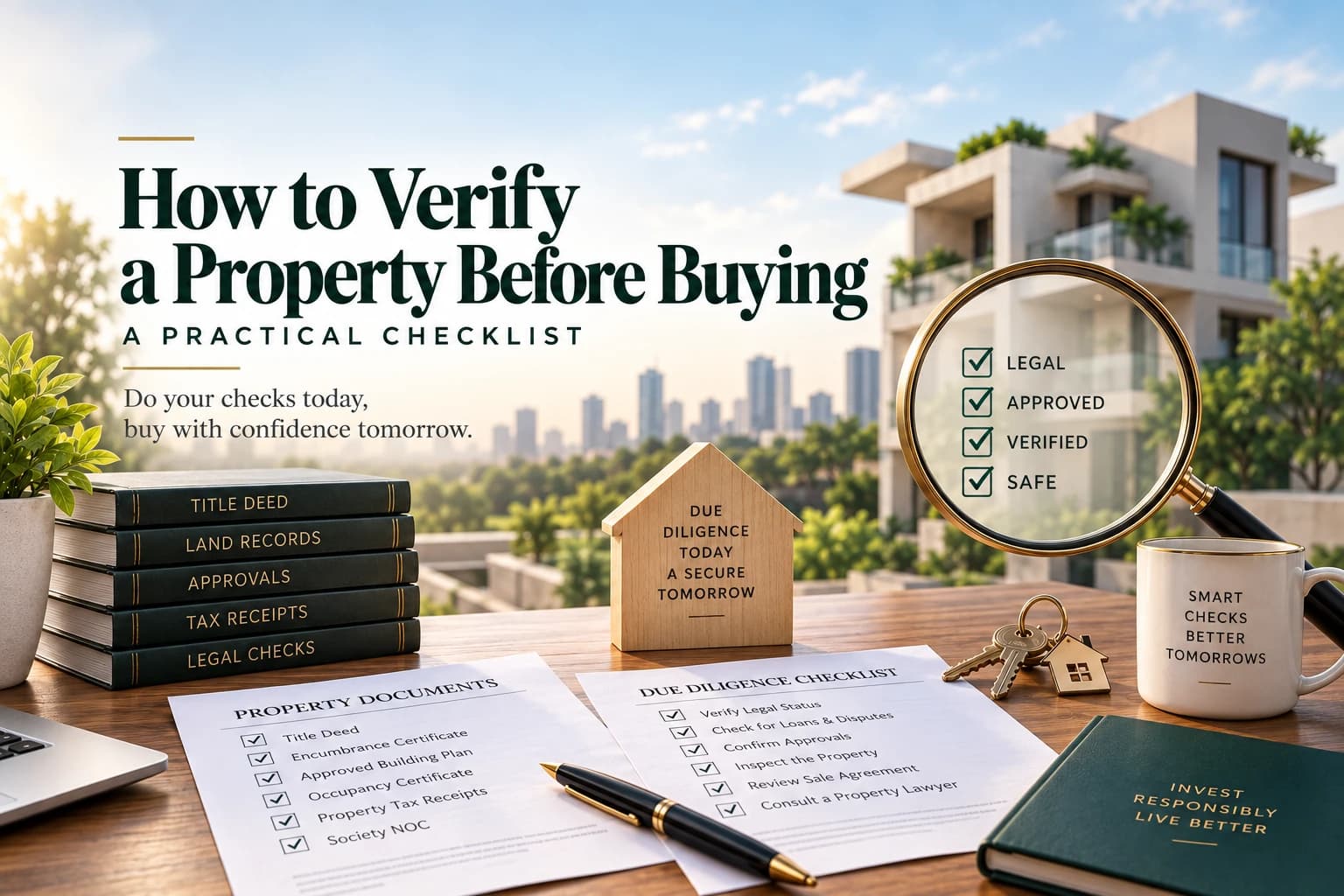
Ask the seller for the following, and read each one instead of collecting them for the file.
- Sale deed or title deed: The registered document proving that the seller owns the property. Check the name, the property description, the area and the registration details.
- Chain of title documents: The sequence of earlier transfers, going back at least 30 years where possible. Each link should be clean. A gap in the chain of title is a serious concern.
- Encumbrance certificate: A record from the sub-registrar's office showing whether the property has been mortgaged, sold or charged to someone else over a stated period.
- Mutation and land records: Proof that the revenue records show the seller as the owner. In Haryana, this means checking the Jamabandi and related land records on the state portal.
- Approved building plan: The plan sanctioned by the competent authority. The construction on site should match it.
- Occupancy certificate and completion certificate: These confirm that the building was constructed as per the sanctioned plan and is fit for habitation. A flat without an occupancy certificate can invite penalties, and banks may refuse to fund it.
- Property tax receipts and utility bills: These show that dues are paid and that the property is assessed in the seller's name.
- Society or RWA no-objection certificate: For resale flats, this confirms there are no pending maintenance dues or restrictions on transfer.
How Do You Verify the Seller's Identity and Right to Sell?
Match the seller's name across every document: the title deed, the land records, the tax receipts and the government ID. Small mismatches in spelling, or a different father's name, can point to a bigger problem.
Be careful when the seller is not the owner. A sale through a power of attorney needs extra scrutiny. Ask for the original document, confirm that it is registered, and check that the owner is alive and has not revoked it. Where the property is jointly owned or inherited, every co-owner or legal heir must sign the sale deed. If the seller is a company or a partnership, ask for the board resolution or partnership authority.
How Do You Check for Loans, Mortgages and Legal Disputes?
Start with the encumbrance certificate for at least the last 13 to 30 years. If the seller has an outstanding home loan, the original documents will be held by the bank. In that case, insist that the loan be closed and the documents released at the time of the sale, and that the payment be routed accordingly.
Then check for litigation. Search the seller's name and the property details on the eCourts portal and the relevant high court's website. A public notice in a local newspaper, published by your lawyer, also invites objections from anyone with a claim. Finally, ask directly whether the property is under any dispute, family settlement or court order. The answer matters less than whether the seller is willing to put it in writing.
How to Verify an Under-Construction Property
Buying from a developer adds another layer of checks.
First, confirm the RERA registration on the state authority's portal, and match the promoter, the sanctioned plan and the possession date. Our guide on checking RERA registration online covers the process step by step.
Beyond RERA, verify these:
- Land title of the developer: Whether the developer owns the land or holds development rights through a collaboration agreement.
- Licence and land use approval: In Haryana, this means the licence from the Town and Country Planning Department and the change of land use permission where applicable.
- Environmental clearance and fire approvals: Required for larger projects and high-rise buildings.
- Bank approvals: Whether reputed banks have approved the project for home loans. It is a useful, though not conclusive, sign of clean documentation.
- Developer track record: How earlier projects were delivered, and whether there are RERA complaints or orders against the promoter.
How to Verify a Resale Property
A resale flat comes with a history, so start by asking for the original allotment letter, the builder-buyer agreement, the conveyance deed and the possession letter. Then check:
- Whether the society has a clean record, with no pending maintenance dues or unpaid transfer charges.
- Whether the flat has been altered from the approved layout. Unauthorised additions and enclosed balconies are common.
- Whether the property is tenanted. If so, ask for vacant possession at the time of the sale in writing.
- Whether electricity, water and gas connections are in the seller's name and free of arrears.
Why Does a Physical Site Inspection Matter?
Documents show what is on paper. The site shows what is on the ground. Visit the property at different times of the day, and observe the surroundings, the access road, the parking, the water supply and the condition of the common areas. For a plot, confirm the boundaries and the area with a measurement, and check that no one is occupying or claiming any part of it. Speak to neighbours and the security staff. They will often tell you what no brochure does.
What Are the Red Flags to Watch For?
- A seller who is in a hurry, or who pressures you to pay before the documents are checked
- A price well below the market rate, with no clear reason
- Reluctance to share original documents, or an offer of photocopies only
- A missing or unclear chain of title
- Payments demanded in cash
- No RERA number on a project that is being actively marketed
- A property that is agricultural land or of unclear land use being sold as residential
- An agent who is not registered with the state RERA authority
Should You Hire a Property Lawyer?
Yes, particularly for high-value purchases. A property lawyer will run a title search, review the sale agreement and flag clauses that favour the seller. Ask for a written legal opinion or title report, so that the findings are on record. The fee is small compared with the value of the property, and many lenders will insist on it anyway.
What Should You Do Before Registration?
Before signing the agreement to sell and paying the balance amount:
- Get every verbal promise written into the agreement.
- Pay through banking channels, and keep a record of every payment.
- Confirm the applicable stamp duty and registration charges for your state and category.
- Check the tax deduction requirements on the transaction, such as TDS on property purchases above the prescribed threshold, with a professional.
- Ensure that the sale deed is registered at the sub-registrar's office in your presence, with the witnesses required.
The Bottom Line
Verifying a property is a matter of habit. Check the title, the encumbrances, the approvals and the seller's right to sell. Match the paperwork to the site, and get a lawyer to review anything you cannot judge yourself. A property that is genuinely clean will stand up to every one of these checks. One that does not is better discovered before you pay.