
Hidden Charges When Buying Property in India: What Every Buyer Must Know
You see an attractive price in an advertisement, visit the site, and like what you see. Then the final cost sheet arrives, and the figure is far higher than you expected. Many buyers in India go through this experience, and it happens because the advertised price is rarely the full price.
This guide explains the hidden charges that come with buying a property, who levies them, and how to plan your budget so nothing surprises you at the time of registration or possession.
What Are Hidden Charges in Property Buying?
Hidden charges are the costs that are not part of the basic sale price (BSP) but must be paid by the buyer to complete the purchase. They are not always illegal or improper. Many are genuine government levies or service costs. The problem is that they are often mentioned late, in small print, or only in the cost sheet given after the booking amount is paid.
A safe rule is to think in terms of the total cost of ownership rather than the per-square-foot rate you were quoted.
Why Is the Final Cost Higher Than the Advertised Price?
Developers advertise the lowest possible starting price to attract enquiries. That figure usually covers only the base rate on the super built-up area. Everything else, from preferential location charges to club membership, is added separately. On top of this come government taxes and duties that no developer controls.
As a rough thumb rule, buyers should keep an additional 10% to 20% of the base price aside for these extras, and more in some markets.
Which Charges Do Builders Add Over the Base Price?
These are the charges that usually appear in a builder's cost sheet.
Preferential location charges (PLC). A premium for flats that face a park, a main road, a swimming pool, or a corner position. It can be a fixed amount or a rate per square foot.
Floor rise charges. An additional rate for each floor above a set level, commonly the fourth or fifth floor onward.
Car parking charges. Covered or open parking is often sold separately, and in some projects it is a significant amount.
Club membership and amenity charges. A one-time fee for using the clubhouse, gym, or pool, sometimes made compulsory.
Power backup charges. A fee for DG set connection, calculated per kVA of backup you choose.
Electricity, water, and sewage connection charges. Fees for the meter, the connection, and the security deposit paid to the utility company.
External development charges (EDC) and internal development charges (IDC). Levied by state authorities for roads, drainage, and utilities. In states such as Haryana, these are a common line item on the cost sheet. Confirm whether they are already included in the price or billed separately.
Infrastructure development charges. Some developers add a separate fee for roads, parks, and common facilities.
Interest-free maintenance security (IFMS) and advance maintenance. A deposit, plus maintenance for the first one or two years, collected at the time of possession.
Sinking fund or corpus fund. A one-time contribution for major future repairs, such as repainting or lift replacement.
Ask for the complete list in writing and have each item marked as either "included" or "extra."
Is Carpet Area Different from Super Built-Up Area?
Yes, and this is where many buyers quietly pay more than they realise. Carpet area is the usable floor area inside your walls. Built-up area adds the thickness of the walls and balconies. Super built-up area adds a share of common spaces such as lobbies, staircases, and lifts. The difference between carpet area and super built-up area is called the loading, and it can be 25% to 40% in some projects.
Under the Real Estate (Regulation and Development) Act, 2016 (RERA), developers must state the price against the carpet area. Even so, many cost sheets still quote a super built-up rate, so always ask for the carpet area in writing and work out the rate you are actually paying per usable square foot.
How Much GST Do You Pay on Property?
GST applies only to properties that are under construction. As per the rates in force at the time of writing, it is 5% on residential properties that are not affordable housing and 1% on affordable housing, both without input tax credit. A property with a completion certificate or occupancy certificate is treated as a completed property and does not attract GST. Since GST can be a large amount on a big-ticket purchase, this difference matters when you compare an under-construction flat with a ready-to-move-in one.
GST rates are revised by the GST Council from time to time, so confirm the current rate before finalising your budget.
What Government Charges Apply to a Property Purchase?
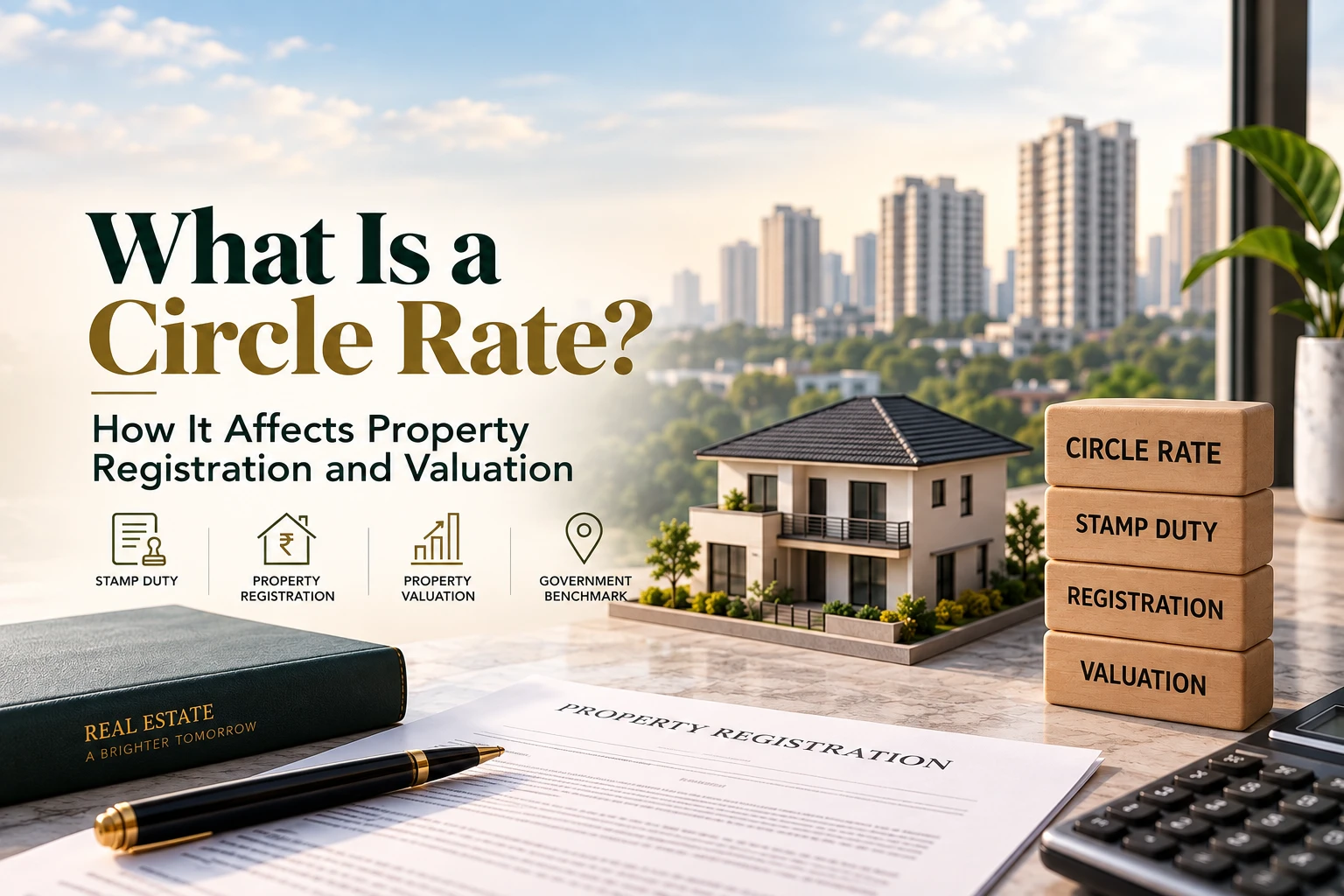
Stamp duty. A state tax on the transfer of property. It usually falls between 4% and 8% of the property value, and some states offer a concession to women buyers. Stamp duty is calculated on the agreement value or the circle rate, whichever is higher.
Registration charges. A separate fee, commonly around 1%, paid when the sale deed is registered at the Sub-Registrar office. Some states cap this fee at a fixed amount.
TDS on property purchase. When you buy a property worth ₹50 lakh or more from a resident seller, you must deduct 1% TDS under Section 194-IA of the Income Tax Act and deposit it with the government. This is deducted from the payment to the seller and is not an extra cost, but it affects how you plan your payments. You will also need to file Form 26QB.
Other local charges. Mutation fees, e-stamp franking fees, and document handling charges are small individually but add up.
What Are the Hidden Charges in a Home Loan?
If you are financing the purchase, the bank's costs come on top of the interest.
- Loan processing fee, usually a percentage of the loan amount
- Legal and technical valuation fees charged by the bank
- Administrative and documentation charges
- Home loan insurance or life cover, which some lenders bundle in
- Pre-EMI interest on an under-construction property, where you pay interest on the amount disbursed while the building is still being built
- Prepayment and foreclosure charges, especially on floating-rate loans for certain borrower types, and conversion fees if you switch from one rate to another
Compare the total loan cost across banks, and not only the interest rate.
What Extra Costs Come With a Resale Property?
Buying a second-hand property has its own set of expenses.
- Brokerage, typically 1% to 2% of the property value
- Society transfer charges or a transfer premium collected by the housing society
- NOC charges from the society or the authority
- Pending dues, such as unpaid property tax, maintenance, or electricity bills, which can become your burden if not cleared before the transfer
- Leasehold-to-freehold conversion charges or authority transfer charges, in cities where the land is held on a lease
- Legal fees for title verification, drafting, and registration
Insist that the seller clears all dues and produces a no-dues certificate before you pay the final instalment.
What Costs Arise After Possession?
Many buyers overlook the money needed after the keys are handed over.
- Interiors and furnishing, which can run into several lakhs
- Mutation of the property in your name in local records
- Annual property tax and monthly maintenance charges
- Home insurance for the structure and the contents
- Shifting costs and, if you are still paying rent elsewhere, overlapping rent and EMI
Can a Builder Charge for Delay, Area Changes, or Cancellation?
Some charges appear only when things do not go to plan.
Interest on delayed payments. If you miss an instalment, the builder can charge interest. Under RERA, this rate is generally linked to the SBI marginal cost of lending rate plus 2%, and the same rate applies when the developer delays possession and owes you compensation. Check your state's RERA rules for the exact rate.
Area variation clause. If the final carpet area differs from what was promised, the cost may be adjusted. Read this clause carefully, and remember that RERA sets limits on how much variation is allowed before the buyer can seek a refund.
Cancellation charges. If you cancel the booking, the builder may deduct a portion of the amount paid. Unreasonably high deductions can be challenged before the RERA authority.
Escalation clauses. Some agreements allow the builder to increase the price for a rise in material costs. RERA discourages arbitrary changes, but the clause should still be read before signing.
An Illustration: Advertised Price vs Actual Cost
The figures below are only an example to show how the numbers add up. Actual rates depend on the state, the project, and the year.
- Advertised base price: ₹80,00,000
- PLC, parking, club, and power backup: ₹8,00,000
- Agreement value: ₹88,00,000
- GST at 5% (under-construction property): ₹4,40,000
- Stamp duty and registration (assumed 7%): ₹6,16,000
- Maintenance deposit and corpus fund: ₹1,20,000
- Legal, loan processing, and miscellaneous charges: ₹60,000
- Approximate total outlay: ₹1,00,36,000
A flat advertised at ₹80 lakh ends up costing about ₹1 crore. Interiors, brokerage, and loan interest are still extra.
If you prefer it as flowing text, here is a paragraph version:
Take a flat advertised at ₹80,00,000. Once PLC, parking, club membership, and power backup charges of ₹8,00,000 are added, the agreement value becomes ₹88,00,000. GST at 5% adds ₹4,40,000, and stamp duty with registration at an assumed 7% adds another ₹6,16,000. Maintenance deposit and corpus fund take ₹1,20,000, and legal, loan processing, and miscellaneous charges take about ₹60,000. The approximate total outlay comes to ₹1,00,36,000, which means a flat advertised at ₹80 lakh costs close to ₹1 crore, even before interiors, brokerage, and loan interest.
How Can You Avoid Paying Hidden Charges?
A little homework before booking saves a great deal of money later.
- Ask for the complete cost sheet before paying the booking amount, and get it in writing
- Read the builder-buyer agreement in full, including the schedules and annexures
- Check the RERA registration of the project and read the declared carpet area and timeline
- Ask for the "all-inclusive" price and compare projects on that basis, not on the base rate
- Question every line marked "as applicable" or "at actuals"
- Confirm the stamp duty on the current circle rate with the Sub-Registrar office or your lawyer
- Never agree to a cash component. It exposes you to legal and tax trouble and leaves you without proof of payment
- Get a property lawyer to review the agreement before you sign
- Keep a contingency buffer of 3% to 5% for costs you did not anticipate
Frequently Asked Questions
Is PLC negotiable?
Often it is, especially in a project with unsold inventory or during a launch offer. It is worth asking.
Are hidden charges legal?
Most of them are legal if they are disclosed in the agreement. Charges that are added later, without being mentioned in the agreement, can be challenged.
Do I pay GST on a resale property?
No. GST does not apply to the resale of a completed property.
Who pays the brokerage in a property deal?
It depends on the market and the agreement. In many cities the buyer pays, and in some the seller or both share it.
Can I claim any of these costs as a tax benefit?
Stamp duty and registration charges may qualify for a deduction under the home loan provisions of the Income Tax Act, subject to the applicable limits. Speak to a tax advisor for your specific case.
Final Word
A property purchase is not made of the price alone. It is the price, plus taxes, plus fees, plus the cost of moving in. Ask for the full picture at the beginning, read what you sign, and plan a buffer. A buyer who knows the real cost is in a much stronger position to negotiate and to avoid a stretched budget later.